
Airbus Flying Green Experience
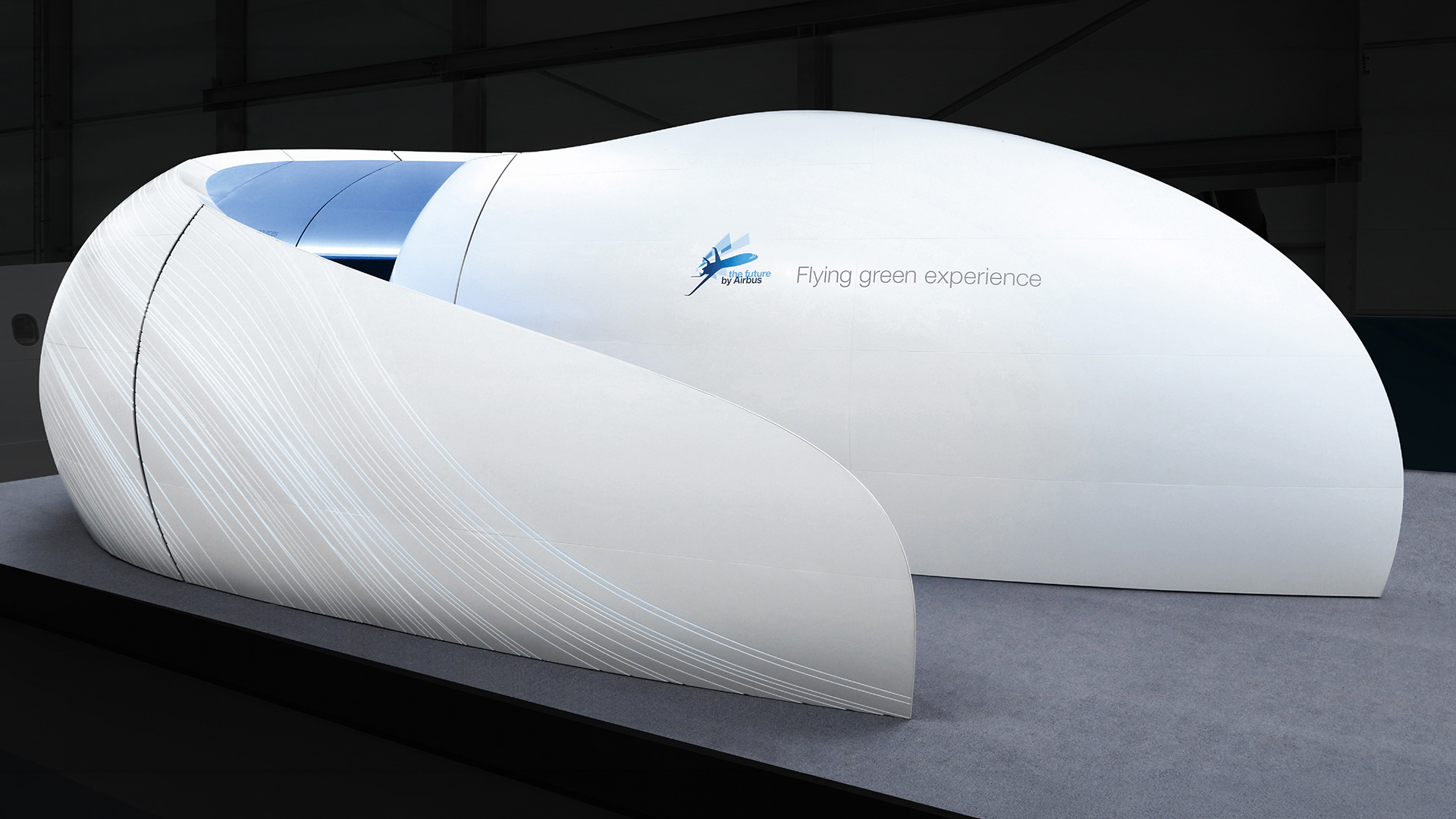
Explain a complex sustainability story to a non-technical audience, in a space they walk through in a few minutes, without reducing it to slogans.
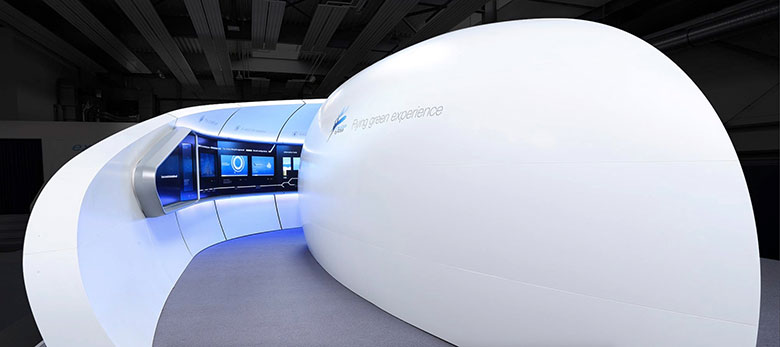
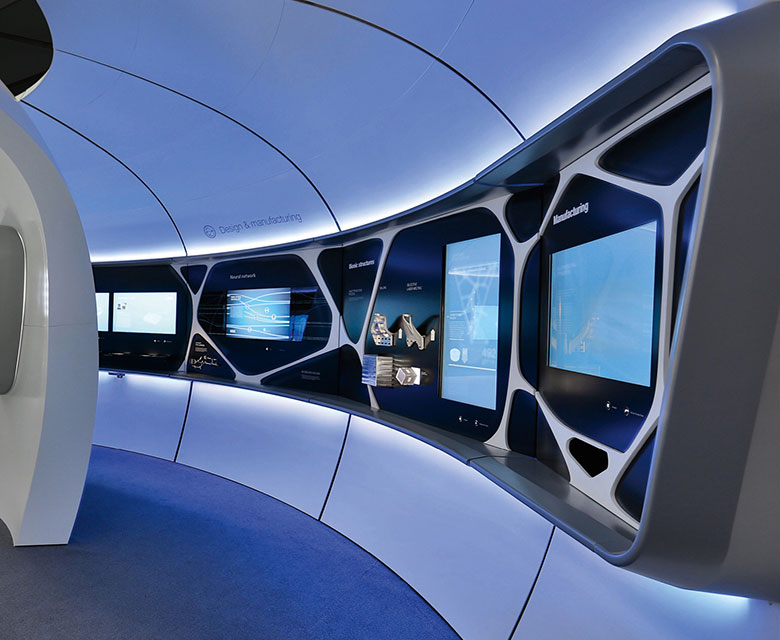
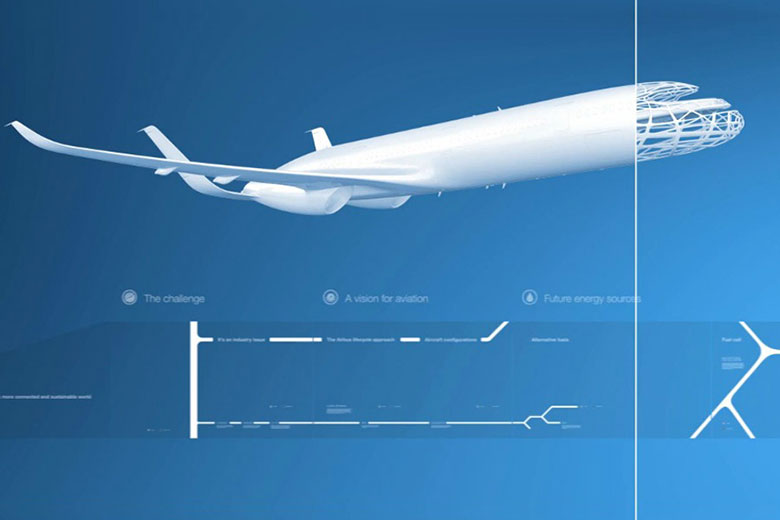
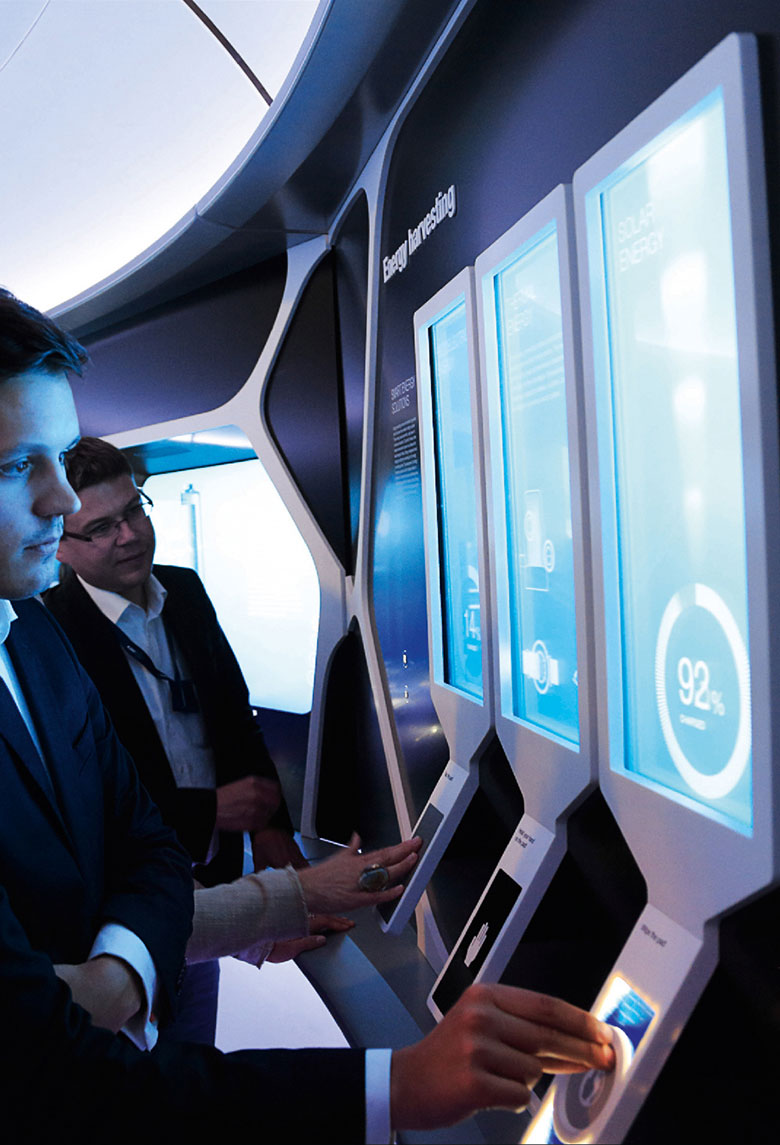
Make the argument spatial. The visitor moves through the story physically; the screens carry the detail, the architecture carries the tone, and the CGI films carry the parts you cannot photograph.
Interface, motion and CGI developed together rather than in sequence, so screen content, surface graphics and the physical build shared one grid, one palette and one motion language.
Environment and mood exploration would now happen generatively in the first days — testing twenty spatial atmospheres before committing to a build. The aircraft, the data and the interface stay exact, built and art-directed. AI widens the search; it does not sign off the result.
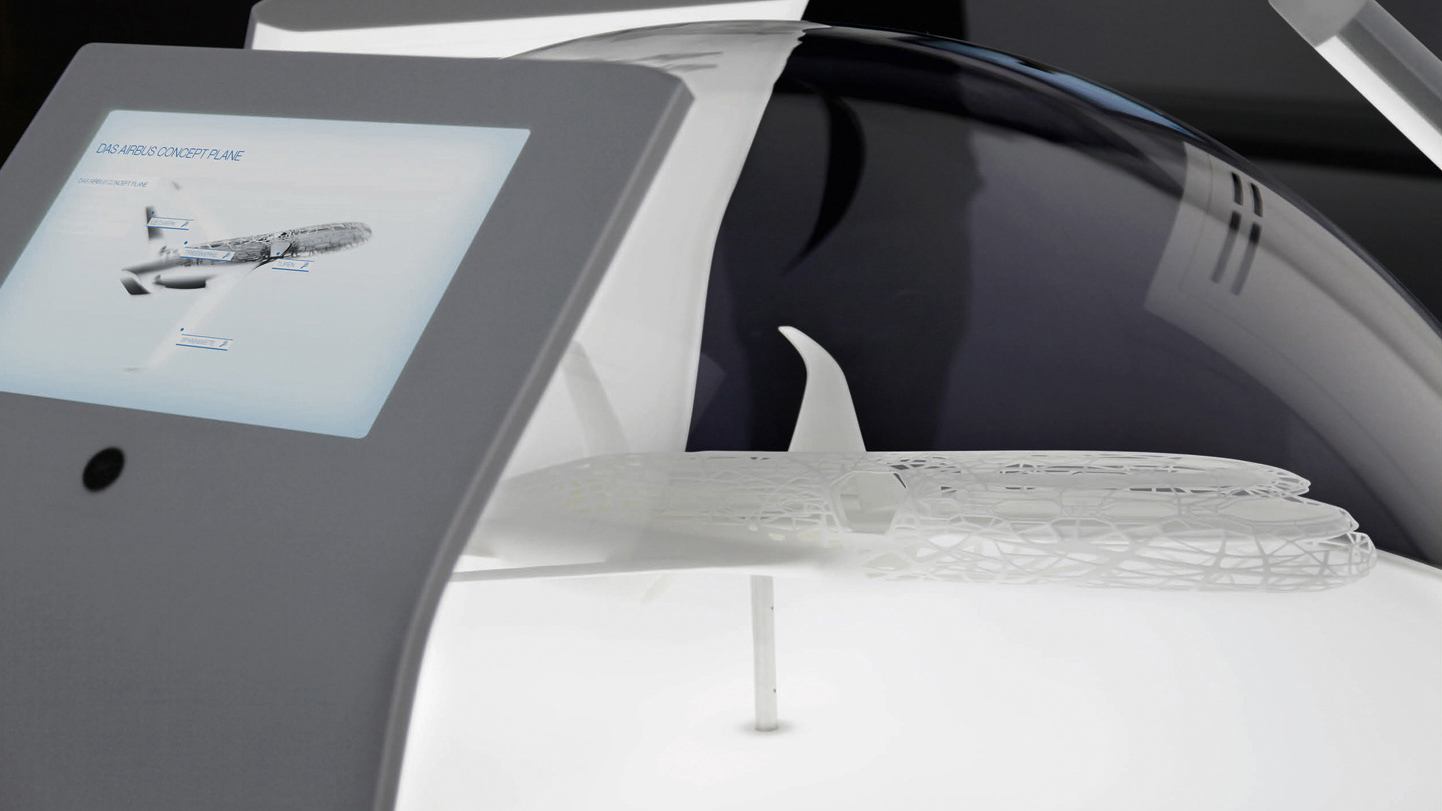
CGI aircraft sequences, interface motion, colour continuity between emissive screens and printed surfaces, and a delivery set matched to the installed hardware.
What the approach changed.
One visual language
Screens, surfaces and architecture designed as a single system.
Complexity made walkable
A technical story delivered in a few minutes of visitor time.
Modular content
Sequences re-used across screens, formats and later events.
VRPE Team GmbH, Hohenbrunn